


Why DISC Profiling Remains a Cornerstone of Effective Outplacement

Updated: Jan 21

Career transition has changed significantly in recent years. Organisations are navigating ongoing economic pressure, accelerated technological change, and shifting workforce expectations, while individuals are increasingly required to make career decisions in shorter timeframes and with less certainty.
In this context, effective outplacement support must go beyond CV preparation and job search tactics. It must help individuals regain clarity, confidence, and direction, both quickly and sustainably.
At DMA Group, one of the most effective tools we continue to integrate into our Career Advancement and Outplacement Programmes is DISC profiling, embedded within a structured, human-centred coaching framework.
Career Transition as a Structured Journey
Based on more than two decades of experience in outplacement and career transition, we view career transition not as a single event, but as a progressive journey. Through this work, we have identified four key phases that individuals typically navigate:
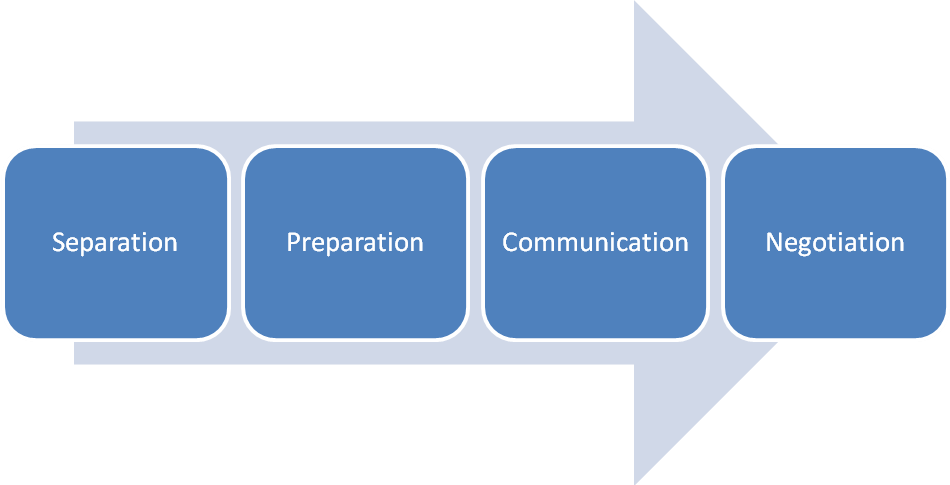
These four phases form the foundation of DMA Group’s career transition methodology and guide how coaching, assessment, and practical support are delivered throughout the outplacement journey. While individuals may move through these phases at different speeds, each phase presents distinct emotional, behavioural, and decision-making challenges.
When DISC profiling is integrated thoughtfully across all four phases, it provides consistent insight, shared language, and structure, enabling individuals to move forward with confidence rather than uncertainty.
DISC as a Practical Behavioural Decision-Making Framework
DISC profiling is often misunderstood as a personality test. In reality, when used correctly, it provides a practical behavioural framework that helps individuals understand:
How they naturally respond to pressure and change
How they communicate and make decisions
How others may experience them in the workplace
Where misalignment may be impacting performance or career progression
During career transition, this insight becomes particularly powerful. Individuals are often processing loss, uncertainty, and identity shift, all of which directly influence behaviour, confidence, and communication.
How DISC Profiling Supports Each Phase of Career Transition
1. Separation: Understanding Behaviour Under Pressure
The separation phase is often characterised by shock, uncertainty, and emotional response. Individuals may experience a loss of identity, confidence, or direction, all of which directly affect behaviour. DISC adds value in this phase by:
Providing objective insight during emotional upheaval
Helping individuals understand how they respond to stress and change
Normalising reactions by linking them to behavioural patterns rather than personal failure
Creating a structured starting point for coaching conversations
Early behavioural awareness helps individuals process separation constructively, rather than becoming stuck in self-doubt or reactivity.
2. Preparation: Reframing Strengths and Career Direction
As individuals move into the preparation phase, the focus shifts toward rebuilding confidence, clarifying career direction, and aligning strengths with market opportunities.
DISC supports effective preparation by:
Identifying core strengths, motivators, and working style
Enabling more authentic and confident CV positioning
Supporting realistic role alignment rather than reactive job applications
Highlighting development areas that may require attention during transition
This is where DISC insight becomes highly practical, shaping how individuals position themselves and make informed career decisions.
3. Communication: Strengthening Interview and Stakeholder Engagement
Career transition requires individuals to communicate effectively with recruiters, hiring managers, and professional networks, often while still managing uncertainty. DISC enhances communication by:
Improving awareness of communication style and impact
Helping individuals adapt their messaging to different audiences
Strengthening interview performance through behavioural consistency
Supporting confident networking and stakeholder engagement
Participants who understand how they communicate, and how others may perceive them, are better able to build trust and credibility in high-stakes conversations.
4. Negotiation: Navigating Offers and Transitions with Confidence
The negotiation phase often introduces new pressure points, including role fit discussions, remuneration negotiations, and onboarding decisions. DISC supports effective negotiation by:
Building confidence during offer and salary discussions
Highlighting negotiation tendencies and potential blind spots
Supporting balanced, informed decision-making rather than fear-based acceptance
Preparing individuals for successful integration into new organisational environments
By this stage, DISC insight enables individuals to approach negotiation with clarity, self-awareness, and professional confidence.
Evidence from Practice
One participant in our Career Advancement Programme reflected:
“The Career Advancement Programme and Coaching was helpful and insightful. I particularly enjoyed the feedback and insight from the DISC report … it made a world of difference.” - Business Systems Support Analyst
This feedback reflects what we see consistently - when individuals understand their behavioural drivers, they are better equipped to navigate change with purpose rather than uncertainty.
DISC as a Continuous Thread
Rather than being a once-off assessment, DISC profiling at DMA Group is used as a continuous thread throughout the career transition journey. Aligned with coaching and practical career support, it helps individuals:
Regain confidence after separation
Prepare effectively for the market
Communicate with clarity and impact
Negotiate from a position of insight rather than fear
As illustrated in the four-phase framework above, DISC supports career transition across every stage, from separation through to successful negotiation and reintegration.
A Human-Centred Approach to Career Transition
At DMA Group, DISC profiling is never used in isolation. It forms part of a holistic outplacement and career transition programme that integrates behavioural insight, coaching, practical tools, and market alignment.
In times of change, clarity is not a luxury, it is essential. If you would like to learn more about how DISC profiling can support effective, human-centred outplacement, we would welcome the conversation.


Comments